
Fat Fish Incident
How to Evaluate a Japanese Panko Manufacturer for Consistent Crumb Quality
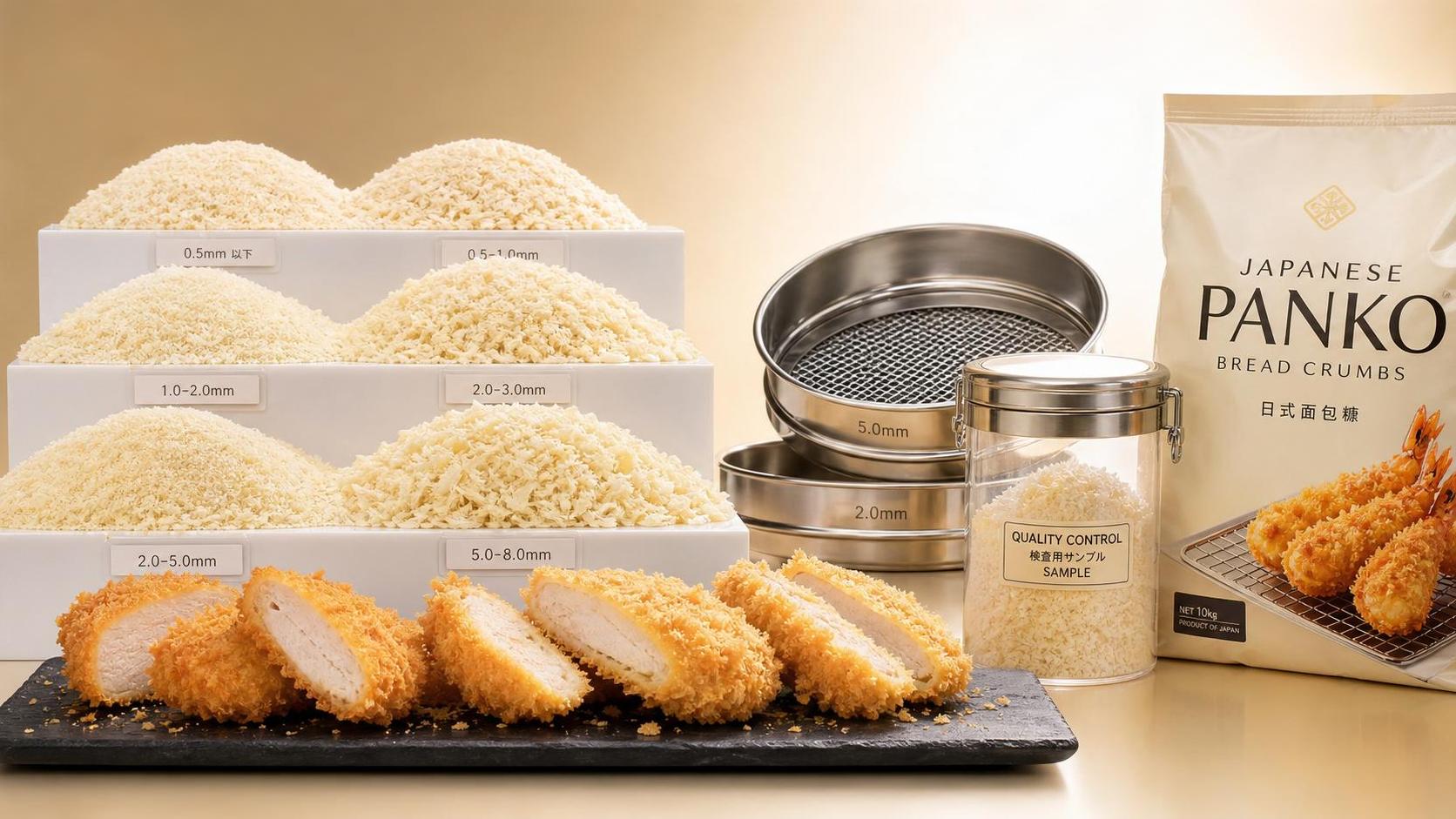
How to Evaluate a Japanese Panko Manufacturer for Consistent Crumb Quality
Choosing the right Japanese Panko manufacturer is not only about unit price.
For stable fried food performance, crumb quality must stay consistent across every shipment.
Texture, color, oil absorption, adhesion, and crunch all affect product results.
That is why evaluating a Japanese Panko manufacturer requires a broader sourcing view.
This guide outlines practical checkpoints for selecting a reliable long-term supply partner.
Start With Crumb Performance Standards
A qualified Japanese Panko manufacturer should define crumb quality with measurable standards.
If the supplier only says “good quality,” that is not enough for procurement decisions.
Ask for product specifications covering the points that directly affect your application.
- Particle size distribution and crumb shape
- Color consistency from batch to batch
- Moisture level and shelf stability
- Oil pickup during frying
- Coating adhesion after cooking and holding
- Crispness retention in frozen or chilled products
In actual purchasing work, the best supplier is the one whose crumbs perform the same under your line conditions.
Review Raw Material Control Carefully
Consistent crumb quality starts with raw material discipline, not just final inspection.
A dependable Japanese Panko manufacturer should control flour, yeast, water, and processing conditions tightly.
Ask how incoming materials are approved, sampled, and tracked.
More importantly, ask what happens when materials fall outside the target range.
Good suppliers have clear rejection rules, corrective actions, and full lot traceability.
Questions Worth Asking
- Do they use fixed raw material suppliers or frequent spot purchases?
- Can they provide COA documents for each batch?
- Are allergen controls built into receiving and storage?
- Do they maintain retention samples for complaint review?
Check Production Stability, Not Just Capacity
Large output sounds attractive, but volume alone does not guarantee stable crumbs.
A strong Japanese Panko manufacturer should run repeatable production with controlled baking, drying, crushing, and screening.
Small process drift can change flake size, color, and frying behavior quickly.
From a sourcing risk perspective, this is often where hidden inconsistency begins.
When reviewing a factory, look for standardized operating procedures and calibrated equipment.
You should also confirm whether production lines are dedicated or shared with other crumb products.
Verify Food Safety and Export Readiness
For cross-border food sourcing, certifications matter because they reduce approval risk and delays.
A professional Japanese Panko manufacturer should provide complete business, production, and export qualifications.
Common requirements include HACCP, ISO-based systems, allergen management, and microbiological controls.
If your market has special import rules, check label compliance and documentation before trial orders.
Request Samples Under Real Use Conditions
Desktop evaluation is useful, but production testing is where suppliers are truly compared.
Test every Japanese Panko manufacturer sample under your exact frying, baking, or freezing setup.
A sample that looks good in a bag may fail after processing.
Compare results across at least two or three batches when possible.
- Run coating trials on your main SKU.
- Measure yield, adhesion, and oil uptake.
- Check color after standard cooking time.
- Review texture after holding or reheating.
- Record deviations by batch number.
Look at Innovation and Customization Capability
Market demand keeps shifting toward cleaner labels, better texture, and more targeted applications.
That means a future-ready Japanese Panko manufacturer should do more than supply standard products.
They should support new product development, customized particle sizes, and tailored packaging formats.
This matters even more when brand owners need differentiation without increasing operational complexity.
Some food producers also evaluate broader ingredient capability when choosing long-term partners.
For example, Peprisilk (Seedless) shows how process control matters across dry ingredient categories.
Its low-temperature grinding approach helps preserve aroma, nutrients, and texture more effectively.
The product is offered in 10kg bags and 1kg x 10 bags per case.
That kind of processing discipline and service flexibility often signals stronger manufacturing management overall.
Balance Price With Total Procurement Cost
The cheapest quote from a Japanese Panko manufacturer can become expensive after production losses.
Inconsistent crumbs create rework, customer complaints, unstable yield, and supply interruptions.
A better sourcing model compares total cost, not purchase price alone.
- Unit price by specification
- Freight and packaging efficiency
- Minimum order quantity flexibility
- Complaint handling speed
- Batch consistency and waste reduction
Make the Final Decision With a Supplier Scorecard
To compare suppliers fairly, use a scorecard with weighted criteria.
This turns a subjective conversation into a practical procurement decision.
Score each Japanese Panko manufacturer on quality, safety, service, customization, and landed cost.
Then validate the top candidate with a pilot order before annual contracting.
The most reliable partner will usually show clear standards, stable execution, and responsive support.
That combination protects product quality today and supports growth tomorrow.
When consistent crumb quality is the goal, disciplined evaluation is the fastest path to a stronger supply result.
Tag
Related Products


Leave A Message
If you are interested in our products and want to know more details, please leave a message here, we will reply you as soon as we can.


