
Fat Fish Incident
Freeze-Dried Durian Storage Mistakes That Can Ruin Texture and Aroma
Freeze-Dried Durian Storage Mistakes That Can Ruin Texture and Aroma
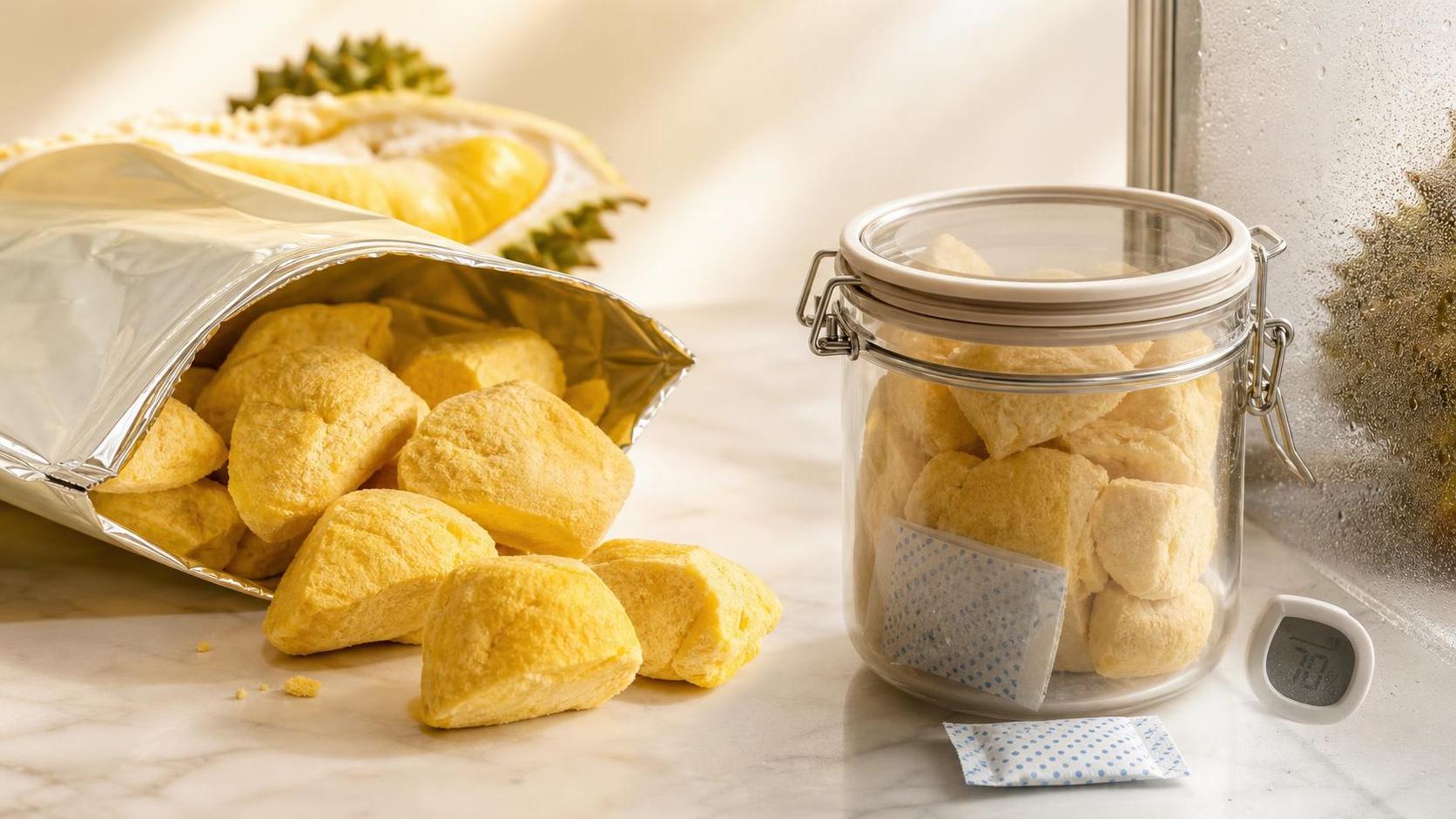
Freeze-Dried Durian is loved for its crisp bite and rich tropical aroma, but small storage mistakes can quickly ruin both. If you want every piece to stay fresh, crunchy, and full of flavor, understanding how moisture, heat, light, and air affect quality is essential. In this article, we explore the most common storage errors consumers make and how to avoid them for a better snacking experience.
The biggest misunderstanding is assuming that a dry product is automatically a stable product. That is not how freeze-dried fruit behaves. Freeze-dried durian has very low moisture when it leaves the package, which is exactly why it feels light and crisp. The problem is that this structure is also highly absorbent. Once the bag is opened, the fruit starts pulling moisture from the surrounding air faster than many people expect. In a dry, air-conditioned room, the change may be slow. In a warm kitchen, a convenience store shelf near a window, or a humid coastal climate, texture loss can happen in a surprisingly short time.
That is why the most common storage failure is not “bad product,” but moisture exposure after opening. Consumers often clip the bag shut and put it back in a pantry. From a practical standpoint, that clip only closes the opening; it does not restore the moisture barrier or the oxygen control of the original sealed pack. What happens next is familiar to anyone who has handled dried tropical fruit at retail level: the first serving is crisp, the second is slightly leathery, and by the third opening the aroma feels flat and the bite is gone.
Where Storage Goes Wrong Fast
Humidity does the most immediate damage, but heat and oxygen change the eating quality in a different way. Durian’s aroma compounds are part of what makes the snack distinctive. If the product sits in a hot car, near cooking equipment, or in a warehouse zone with poor temperature control, the aroma profile can shift from fresh and creamy to dull or slightly stale. This does not always mean the product is unsafe; it means the sensory quality no longer matches what consumers expect when they buy freeze-dried fruit.
Light is another overlooked factor, especially in transparent jars or countertop display containers. For short service periods, clear presentation may look attractive. For long holding times, it is usually a poor tradeoff. Repeated exposure to light and ambient warmth can accelerate quality loss, particularly in products with delicate natural volatiles.
The issue becomes more obvious in food service and gift packing than in single-household use. A family may finish a bag within a day or two. A cafe topping station or snack bar may open a larger pack and keep it in intermittent use across several shifts. In that setting, every reopening introduces humid air, handling variability, and odor cross-contact from the surrounding environment. Durian is aromatic enough to influence nearby foods, but it can also pick up external odors if stored carelessly. Putting opened freeze-dried fruit next to spices, coffee, or savory ingredients is a mistake people notice only after the flavor has already drifted.
The Pantry Is Not Always the Right Answer
“Store in a cool, dry place” sounds simple, but real storage conditions are rarely that controlled. In many homes, the pantry is above or beside appliances that generate heat. In some retail back rooms, cartons are stacked against exterior walls where daytime and nighttime temperatures swing. Even when the package remains unopened, these site conditions matter. A well-made freeze-dried product can maintain quality far better when distribution and storage stay stable.
This is one reason experienced food operators look beyond the label and think in terms of the whole handling chain. Shelf life on paper is only meaningful if the package stays intact and the environment stays reasonably controlled. For example, ingredients and powdered food components processed with low-temperature handling are often valued because they preserve original flavor more effectively. In adjacent food applications, products such as Cinnamomi Cortex Pulveratus are promoted with low-temperature grinding, microwave sterilization, and a 12-month shelf life under proper storage, which reflects a broader industry principle: preserving aroma starts long before the consumer opens the bag, and it can still be lost quickly through poor post-packaging handling.
Refrigeration is often suggested as a fix, but it is not automatically correct. If an unopened pack is moved between cold storage and room temperature without care, condensation risk increases once it is exposed. For opened product, refrigeration can help only if the container is genuinely airtight and the fruit is allowed to return to room temperature before opening, so moisture from the air does not condense on the cold pieces. Otherwise, the attempt to protect crispness can do the opposite.
Different Use Settings Need Different Habits
Not every user should store Freeze-Dried Durian the same way. The right decision depends on turnover speed, pack size, and exposure time.
This is where packaging format matters more than people think. Large packs may look economical, but if consumption is slow, the effective loss from texture deterioration can outweigh the price advantage. In food manufacturing and ingredient handling, pack size is often matched to line usage for exactly this reason. The same logic applies to premium snacks.
Questions about “Why did my durian lose crunch before the expiry date?” usually come back to one of three conditions: the seal was compromised, the product was stored in a humid space, or the opened contents were held too long. Expiry dates assume normal intact storage, not repeated exposure on a countertop. That distinction is basic in food quality control, yet it is often missed in consumer use.
Another useful check is sensory consistency from pack to pack. If aroma and crispness vary widely within the same batch at the point of use, look first at transport and storage conditions rather than jumping straight to formulation concerns. Companies with established food processing standards, ISO-aligned management, and controlled export practices generally aim to minimize this variability, but no packaging system can fully compensate for poor handling after sale. The same thinking supports ingredients like Cinnamomi Cortex Pulveratus, where preserving flavor through controlled processing only pays off if the downstream user stores it properly.
If the goal is simple: keep Freeze-Dried Durian crunchy, aromatic, and true to its original character, focus less on where there is empty shelf space and more on the actual environment. Dry air, limited oxygen exposure, moderate temperature, and fast consumption after opening are what make the difference. When those conditions are not available, changing pack size or storage method is usually more effective than hoping the product will tolerate the room.
Tag
Related Products


Leave A Message
If you are interested in our products and want to know more details, please leave a message here, we will reply you as soon as we can.


