
Fat Fish Incident
How Brown Sugar Buns Keep a Moist Crumb Without Becoming Dense
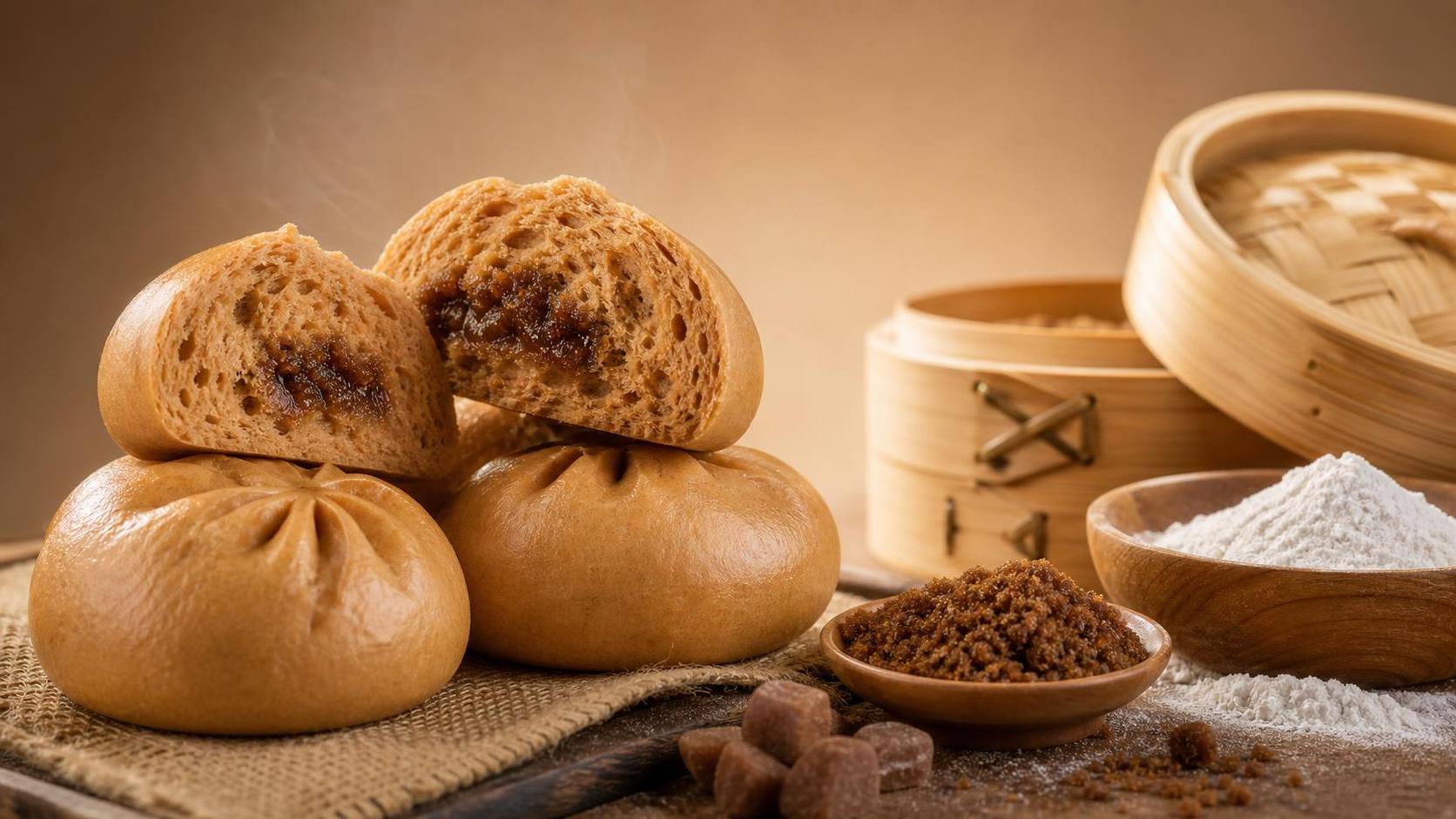
How Brown Sugar Buns Keep a Moist Crumb Without Becoming Dense
The hardest version of Brown Sugar Buns is not the one that looks soft when it leaves the steamer. It is the one that still feels light, moist, and clean on the palate after holding, packing, transport, or reheating. That is where many formulations drift off course. A bun can be wet but heavy, sweet but flat, fluffy for ten minutes but dry by the next sales window. The industry question is not simply how to make a soft bun. It is how to hold moisture inside the crumb structure without loading the dough so heavily that the texture turns tight and pasty.
Brown sugar complicates that balance more than white sugar does. Its molasses content adds flavor, color, and a deeper finish, but it also changes water behavior in the dough. In a steamed bun line, that usually shows up as slower proofing, stickier handling, and a crumb that can look plush while eating dense. In baked versions, the risk is different: the surface browns early, while the center may still be underdeveloped. Operators who treat brown sugar as a straight sweetness swap often end up chasing the wrong correction later with extra water or longer cook time.
Why Moisture Retention Fails
Most failures start with structure, not hydration alone. If the gluten network or starch gel is weak, added moisture has nowhere stable to sit. The crumb then collapses into a gummy density, especially after cooling. On the other hand, if the dough is mixed too tight to compensate for stickiness, the bun loses openness and the chew becomes compact. That is why experienced production teams look at water absorption, sugar type, mixing energy, proof profile, and final thermal treatment as one system.
One common production mistake is chasing softness by raising sugar and oil together. This may improve the first bite, but it often reduces dough strength and weakens tolerance on the line. Another is assuming that a longer steam or bake will fix a wet center. Usually it only firms the outer crumb and makes the texture uneven from edge to core.
For plants running large batches, ambient conditions matter more than many teams admit. Brown sugar dough behaves differently in a cool, dry workshop than in a humid production room. Flour absorption swings, fermentation response shifts, and the wrapping stage may start pulling condensation if the cooling window is rushed. Moist crumb quality is often lost in these transitions, not at the mixer.
Where the Texture Balance Changes
Retail bakery buns, central-kitchen buns, and frozen ready-to-heat buns should not be built the same way. A bakery selling within hours can tolerate a more delicate crumb because the product does not need long holding stability. A central kitchen supplying multiple outlets usually needs better moisture control after reheating, which means the dough must recover rather than merely look soft when fresh. Frozen formats add another pressure point: freeze-thaw damage can make a once-open crumb feel dry at the surface and dense underneath.
That is why some teams prefer to build flavor outside the dough rather than forcing all richness into the bun base. A filling, swirl, or accompanying savory layer can reduce the burden on the crumb itself. In rice and flour product development, this is one reason complementary sauces or inclusions are sometimes introduced. A product such as Mushroom Rice Sauce fits applications where a brown sugar bun is part of a broader menu or paired offering, because the dough can stay lighter while the eating experience still feels full. It is not a texture fix by itself, but it can prevent over-formulation of the bun.
What Experienced Teams Watch on the Line
Dough feel is still a useful judgment point, but it should be tied to repeatable checkpoints. Is the dough tacky because hydration is correct, or because the sugar is pulling free water and the mix is underdeveloped? Does the bun spring back after shaping, or does it smear and resist? During proof, does it expand evenly, or does the surface tighten while the center lags? These are practical signs that often predict whether the finished crumb will be moist and airy or wet and heavy.
In steaming, aggressive heat can set the outer layer too quickly. The bun rises, then loses tenderness as moisture redistributes unevenly. In baking, the danger is often early color from brown sugar before internal structure is ready. Neither problem is solved by a single universal temperature setting; equipment load, pan spacing, steam generation, and batch size all affect the result. Plants with stable outcomes usually document these conditions tightly rather than relying on nominal recipe values alone.
Ingredient selection also matters beyond sweetness. Brown sugar quality variation can shift both flavor and handling. Flour strength needs to match the intended process window, not just the desired softness. Fat choice changes mouthfeel and shelf behavior. Supporting ingredients should be evaluated for whether they genuinely improve moisture retention or simply create an illusion of softness on day one.
When products move into export or multi-channel foodservice, consistency and compliance start carrying more weight. Supporting materials used alongside buns, including seasonings for rice and flour applications, are often screened for systems such as BRC, HACCP, and ISO because buyers want process discipline as much as flavor. For example, Mushroom Rice Sauce is positioned for Chinese cuisine and rice-and-flour product use, with specification options including 1 kg x 12 bags per box and 10 g x 100 bags per box. In menu development, that kind of format flexibility can matter more than broad claims, especially when portion control and back-of-house handling are tight.
A Better Way to Judge the Result
The best assessment is not whether the bun feels soft at first touch. Press the crumb after cooling. Tear it and look at the cell structure. Reheat it the way the customer will actually serve it. Hold it in the intended package. If sweetness seems to sit on the surface while the center eats heavy, the formula is out of balance. If the bun stays tender but lacks resilience, structure is probably too weak. If it dries quickly despite high initial moisture, water is present but not properly bound within the starch-protein network.
Brown Sugar Buns succeed when moisture, structure, and process discipline are aligned. Teams that get this right usually make fewer dramatic adjustments than expected. They tune proofing before adding more sugar, fix heat transfer before extending cook time, and evaluate the whole service path before changing the dough. That is usually the more reliable route to a moist crumb that stays light instead of drifting into density.
Tag
Related Products


Leave A Message
If you are interested in our products and want to know more details, please leave a message here, we will reply you as soon as we can.


