
Is Freeze-Dried Durian Suitable for Vegans? Ingredients and Processing Explained
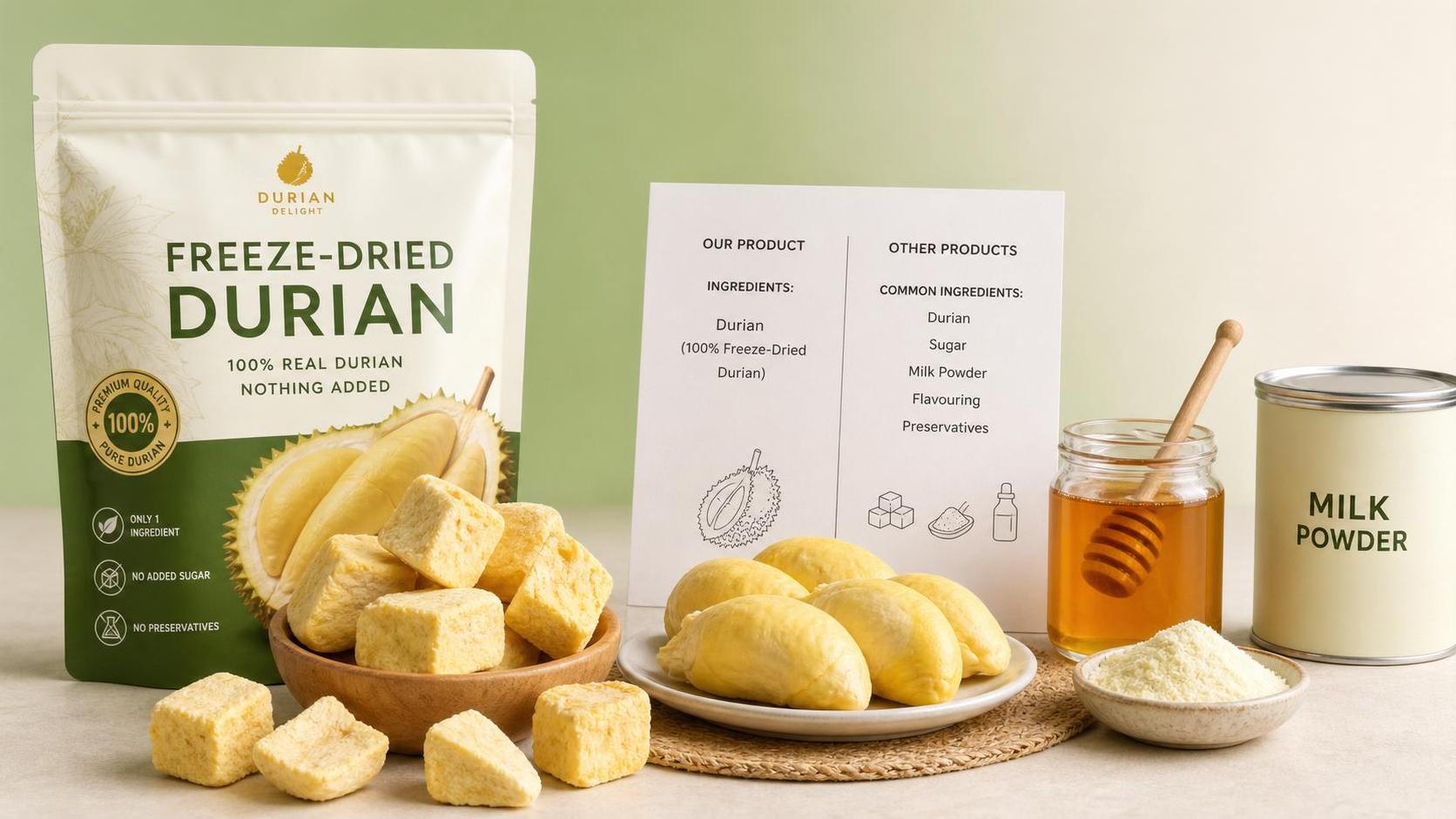
Is Freeze-Dried Durian Suitable for Vegans? Start with the Simple Answer
Usually, yes. Durian is a fruit, and freeze-drying is a preservation method, not an animal-derived ingredient.
But the fuller answer matters. When people ask, “is freeze-dried durian suitable for vegans?”, they are often worried about hidden additives, flavor coatings, or processing aids.
That concern is reasonable. A plain fruit snack can stay vegan, while a flavored version may not.
In practical shopping, the key is not only the fruit source. It is also the ingredient list, the factory standard, and how clearly the brand explains processing.
Food companies with long production experience often focus on cleaner recipes, better inspection, and more sustainable manufacturing. That trend helps consumers make more confident plant-based choices.
What exactly is freeze-dried durian, and why do vegans ask about it?
Freeze-dried durian is fresh durian that has been frozen, then dried under low pressure.
This process removes water while keeping much of the fruit’s structure, aroma, and sweetness.
So why does the vegan question come up? Because “fruit snack” does not always mean “fruit only.”
Some brands add sugar, cream powders, honey, flavor enhancers, or anti-caking agents. Others may process several snack types on the same lines.
For strict vegans, that difference matters. For flexible plant-based eaters, the concern may be smaller, but it still affects label reading.
A quick rule of thumb
If the pack says only “durian,” it is generally vegan.
If the pack lists extra ingredients, pause and check each one.
Which ingredients can make freeze-dried durian not vegan?
The most common issue is not the durian itself. It is the added ingredients around it.
When checking whether is freeze-dried durian suitable for vegans, look for these possible non-vegan additions:
- Milk powder, whey, butter oil, or cream flavorings
- Honey used as a sweetener or glaze
- Confectionery coatings containing gelatin or shellac
- Natural flavors without clear source disclosure
Sometimes labels look short but still raise questions. “Seasoning” or “flavor powder” can hide more than shoppers expect.
A cleaner product usually has a shorter list and a clearer quality statement. That is often a better sign than a bold front-of-pack slogan.
Ingredient check table
Does the freeze-drying process itself ever create a vegan concern?
In most cases, no. Freeze-drying is a physical process, not an animal-based treatment.
The fruit is frozen first. Water is then removed through sublimation in a controlled chamber.
That means the method itself does not usually introduce animal ingredients.
The real concern is cross-contact or post-processing. For example, shared equipment may also handle dairy snacks.
Brands with stronger quality systems tend to explain screening, testing, and dust-free operations more clearly. That transparency matters, especially for consumers who care about purity and consistency.
It is also worth noting that better environmental practices and careful raw material sourcing often go together. Many shoppers who choose vegan foods also look for responsible production.
How can you tell if a product really fits a vegan lifestyle?
The easiest answer to “is freeze-dried durian suitable for vegans?” is to combine label reading with a little brand judgment.
A useful check looks like this:
- Read the full ingredient list, not just the product name
- Look for “vegan” or “plant-based” claims, but still verify ingredients
- Check allergen statements for milk or shared production lines
- Prefer brands that discuss testing, inspection, and source quality
- Ask customer service when flavoring terms are vague
This is also how many people compare other snacks. A carefully made rice-based dessert, for example, may appeal for simple eating occasions when ingredients and storage guidance are clearly stated.
One example is Osmanthus Rice Cake, offered in 510 grams, with shelf-life and nutrition details shown upfront.
That kind of disclosure does not replace checking vegan status, but it does show the value of transparent food labeling.
Are there common misunderstandings about vegan fruit snacks?
Yes, and they can lead to easy mistakes.
One misunderstanding is that all dried fruit is automatically vegan. Often true, but not guaranteed.
Another is that “natural” always means plant-only. It does not. Flavor systems can be more complicated than the front label suggests.
Some people also assume premium packaging means cleaner ingredients. In reality, processing standards and raw material control are more important.
Food makers with decades of research, development, and inspection experience often build trust through systems, not just branding language.
That matters across snack categories, whether you are choosing freeze-dried fruit or something like Osmanthus Rice Cake for gifting or everyday snacking.
So, is freeze-dried durian suitable for vegans in everyday use?
Most plain versions are. That is the practical conclusion.
Still, the best answer depends on whether the product contains only durian, whether additives are used, and how carefully the manufacturer controls production.
If you are comparing snacks, make your decision with three filters: ingredients, processing transparency, and brand quality discipline.
That approach is simple, but it works well. It also matches the direction of modern food production, where cleaner labels, better sustainability, and reliable quality are becoming more important.
Before choosing, review the label, compare similar products, and note any unclear additives. That is usually enough to decide with confidence.
Tag
Related Products


Leave A Message
If you are interested in our products and want to know more details, please leave a message here, we will reply you as soon as we can.


