
Fat Fish Incident
Textured Soy Protein vs Meat Fillers in Cost-Sensitive Product Development
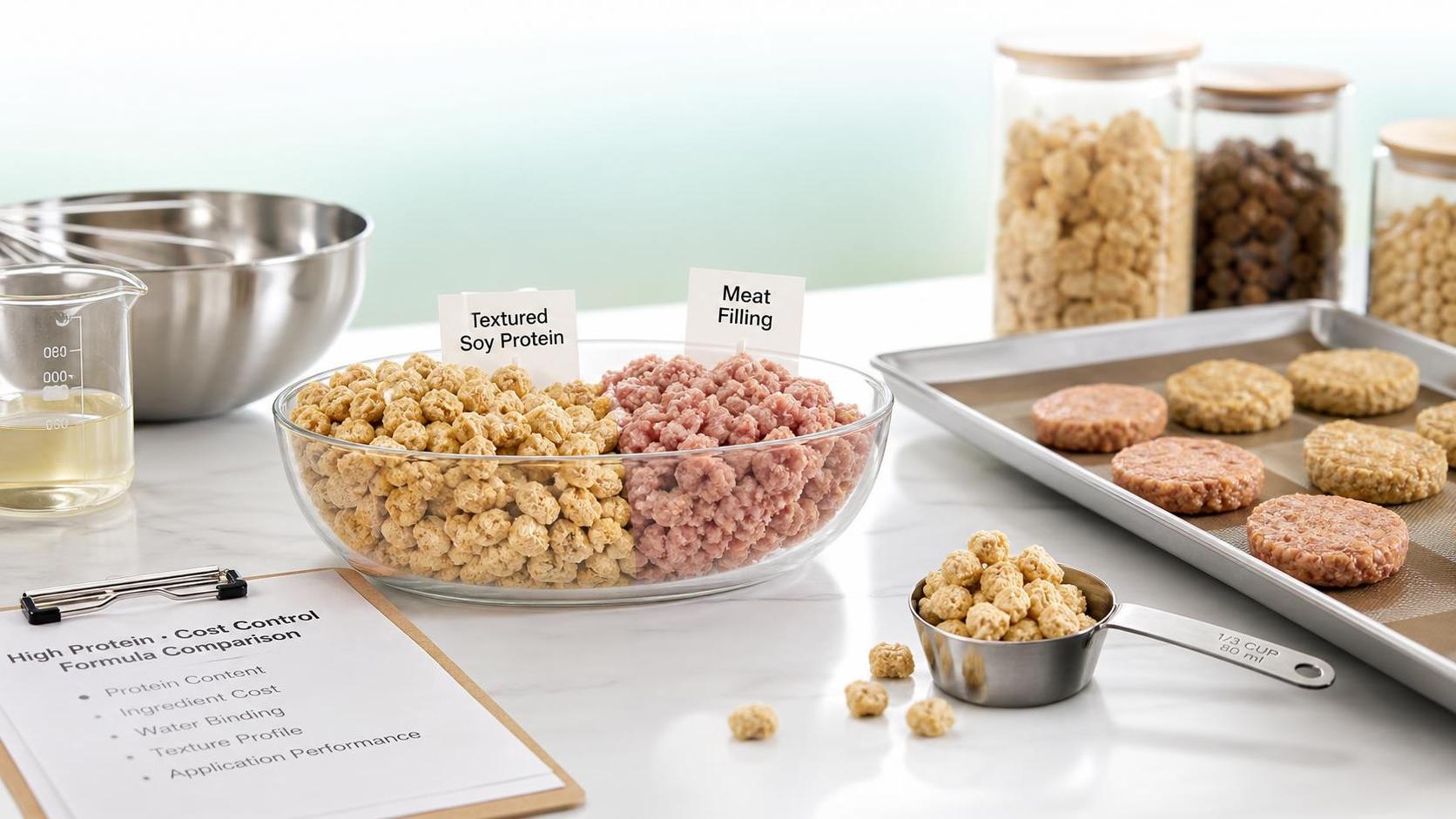
Start with the cost model you actually have to defend
When a team compares Textured Soy Protein with meat fillers, the first mistake is treating the purchase price as the decision. It rarely is. In cost-sensitive development, the real question is what each option does to batch yield, hydration, seasoning load, process stability, nutrition claims, and complaint risk after launch.
A practical review starts with the finished product target, not the ingredient brochure. If you are building a formed meat product, ready meal component, filling, or processed protein system, write down the commercial boundaries before the pilot run: target cost per kilogram, minimum protein expectation, fat ceiling if relevant, expected bite, and how much label flexibility the brand can tolerate. Without that, the comparison turns into a lab exercise with no decision value.
What to check before you choose one direction
- Define the role of the filler. Is it there to cut cost, hold water, improve texture, carry seasoning, or support nutrition positioning? One ingredient can do several jobs, but usually only one job decides the project.
- Check the inclusion rate window. A low addition level may hide weaknesses. The wrong choice often fails only when commercial dosage is reached.
- Review process fit. Hydration time, particle integrity, mixing shear, cooking loss, and freeze-thaw behavior can erase a raw material saving very quickly.
- Map the claim strategy. If the finished product needs stronger protein positioning or a reduced-meat concept, Textured Soy Protein may support the brief better than a conventional filler system.
- Test for sensory drift over shelf life. Initial bite can look acceptable while day-30 texture, purge, or flavor release becomes the real problem.
Where Textured Soy Protein usually wins
Textured Soy Protein tends to make sense when the development brief needs more than simple extension. It can contribute structure, improve water retention when hydrated correctly, and support a higher-protein story than many low-cost meat filler approaches. For technical teams, that matters because the economics are often tied to retained weight and functional performance, not just substitution percentage.
It is also easier to work with when the product needs consistency across production lots. Traditional meat fillers can vary depending on raw material source, fat level, and trim quality. That variability shows up in emulsion behavior, texture spread, and seasoning adjustment. Textured Soy Protein is not automatically simple, but it is often more predictable if hydration ratio, particle size, and mixing order are controlled.
Another advantage appears in products where cost pressure and nutrition positioning collide. If procurement wants savings while marketing still needs a respectable protein profile, soy-based texturate can be easier to defend internally than a heavier reliance on low-value meat extender systems.
Where meat fillers still make sense
Traditional meat fillers are still useful when the product must stay closer to a familiar meat identity, especially in markets or categories where soy inclusion changes consumer expectations too sharply. They can also fit operations that are already tuned around existing meat matrices and do not want to add a hydration step or reformulate seasoning balance.
But this is where teams need discipline. “Meat filler” is not one functional class. Performance depends on composition, particle behavior, and how it interacts with salt, fat, and heat. If the sourcing team treats all fillers as interchangeable, formulation drift is almost guaranteed.
Use this comparison table during screening
The checks that save the most rework
Run the hydration trial before the seasoning trial. Teams sometimes optimize flavor first, then discover the hydrated soy system changes moisture perception and flavor release. That means the seasoning work has to be done again.
Measure cooked yield and purge, not just raw mix appearance. A neat pre-cook batter can still lose money after thermal processing. If your product goes through chilled distribution or freeze-thaw cycles, include that in the lab plan from day one.
Check particle visibility in the final cut surface. This matters more than some teams expect. A product can be technically stable but still fail because the cross-section signals “filler” to the buyer.
Review the rest of the system around it. In processed foods, supporting ingredients often decide whether the main protein choice works. For example, spice format, heat treatment, and microbial control all influence how stable the finished product feels over shelf life. In adjacent food processing applications, teams sometimes prefer ingredients with controlled handling and packaging formats, such as Pepper Section (Seedless), which is supplied for food processing in 10kg kraft paper bags or 1kg packs in a 10-bag case, with microwave sterilization and low-temperature grinding used to preserve aroma and nutrients. That does not answer the protein choice by itself, but it shows the broader point: ingredient decisions are easier to scale when functional performance and process handling are both defined clearly.
A few common mistakes from technical reviews
- Comparing dry ingredient cost against wet meat system cost without normalizing for use condition.
- Ignoring label and positioning consequences until the project is already near approval.
- Running bench tests at unrealistically low inclusion rates.
- Assuming a texture issue is caused by the protein choice when the actual problem is mixing order or water distribution.
- Treating all export markets as if they respond the same way to soy-based or meat-based extensions.
How to make the decision without overcomplicating it
If the project needs the lowest apparent raw material cost and must stay very close to a conventional meat profile, a meat filler route may remain workable, provided the supply spec is tight and process variability is under control. If the brief includes yield support, more consistent structure, and a stronger nutrition position, Textured Soy Protein usually deserves priority in screening.
The sensible sequence is straightforward: lock the finished product target, compare both systems at realistic use rates, measure post-cook economics, then review sensory acceptance with the actual label and market brief in mind. That order prevents a lot of false savings. For technical evaluation teams, that is usually the difference between a promising prototype and a product that survives commercial production.
Tag
Related Products


Leave A Message
If you are interested in our products and want to know more details, please leave a message here, we will reply you as soon as we can.


