
Fat Fish Incident
What are the ingredients in Mexican tortillas sold for foodservice use
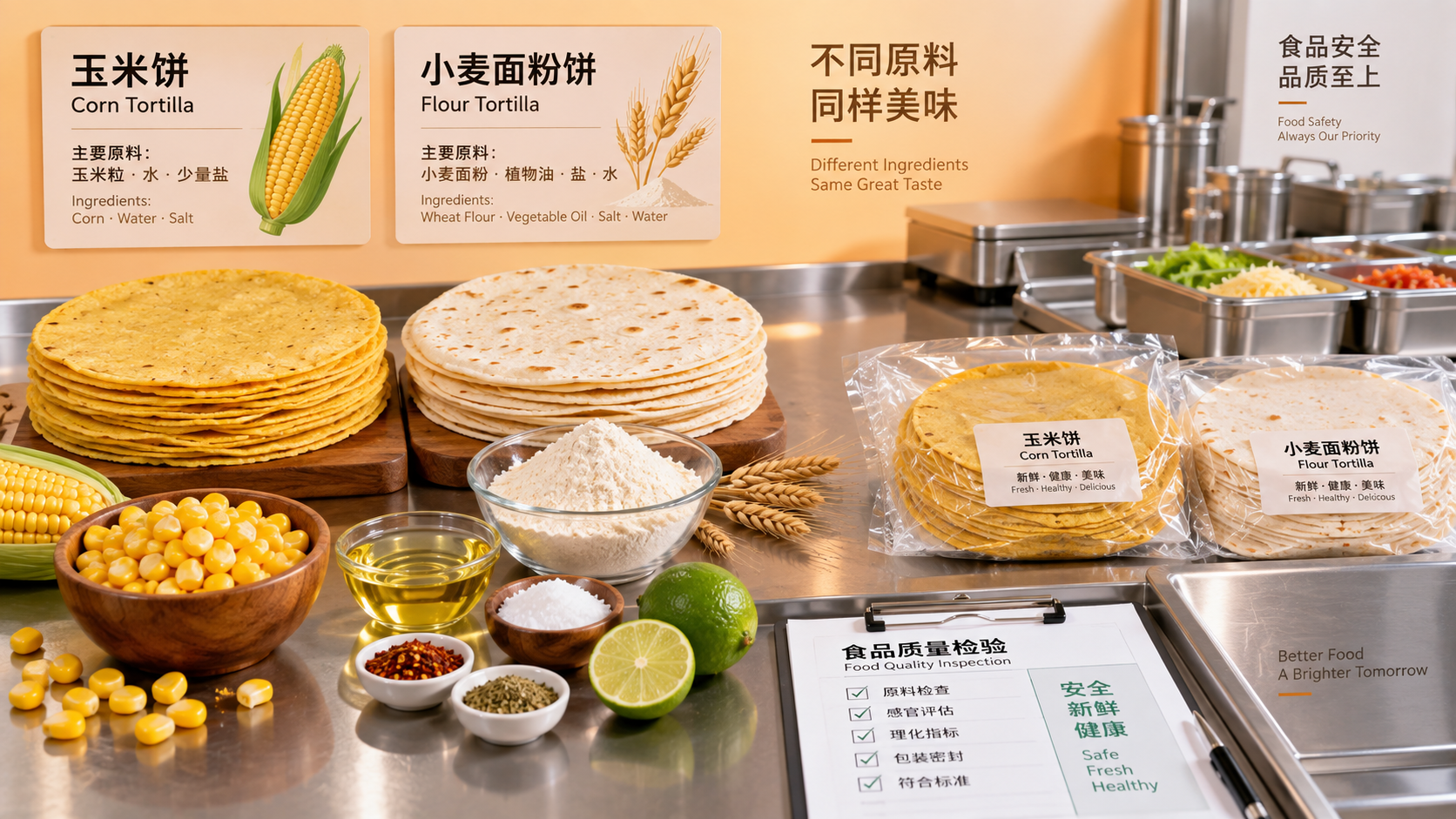
What are the ingredients in Mexican tortillas? For a foodservice buyer, quality-control manager, or food-safety professional, the answer is rarely as simple as “corn, water, and salt.” A tortilla served in a restaurant may be made from a short, traditional-style formula, but tortillas supplied through foodservice distribution often include oils, gums, preservatives, emulsifiers, leavening systems, acidulants, or processing aids. Each of those choices can affect allergen management, storage instructions, lot consistency, sensory performance, and the accuracy of menu or customer-facing claims.
The right question is therefore not only what ingredients are present, but why they are present and whether the formulation fits the intended use. A tortilla that performs well on a high-volume taco line may not be suitable for a school meal program with strict allergen controls. A soft flour tortilla designed for chilled distribution may behave very differently from a corn tortilla intended for immediate frying. Reading the ingredient declaration is the starting point; reviewing the supplier’s specification and change-control process is where meaningful purchasing decisions are made.
The basic ingredients depend on the tortilla type
Mexican tortillas are generally divided into corn tortillas and flour tortillas. They share a flat, round format, but their raw materials and processing logic are different enough that they should not be assessed as one category.
A traditional corn tortilla begins with corn, water, and lime, usually calcium hydroxide. In the conventional nixtamalization process, corn is cooked and steeped in an alkaline solution before being washed and ground into masa. This step changes flavor, aroma, texture, and handling properties. It can also influence the mineral profile of the finished tortilla. Some commercial products use fresh masa, while others use masa harina, a dried corn flour produced from nixtamalized corn and rehydrated during tortilla manufacture.
A simple corn tortilla may therefore list only corn treated with lime, water, and perhaps salt. In foodservice production, however, processors may add gums, stabilizers, enzymes, preservatives, or acidity regulators to help maintain flexibility during storage and reheating. These additions are not automatically a quality problem. They need to be evaluated against the operating conditions: frozen holding, chilled delivery, extended distribution routes, steam-table exposure, grilling, frying, or packaging for takeout.
Flour tortillas usually start with wheat flour, water, fat or oil, salt, and a leavening system. The wheat gluten network is central to the extensibility expected in wraps and burrito tortillas. Fat may be vegetable oil, shortening, or another declared fat system, and it affects tenderness, rollability, and the tendency to crack when folded. Leavening agents, such as baking powder components, create a lighter structure and help control thickness. Dough conditioners, emulsifiers, or enzymes may be used to make processing more forgiving and to keep the tortilla soft after packing.
That difference matters immediately for allergen control. Wheat is a major concern in flour tortillas, while corn tortillas may be a more suitable option for operations avoiding wheat ingredients. Still, “corn tortilla” should never be treated as a synonym for “allergen-free.” Shared lines, shared warehouses, flavor inclusions, and supplier declarations must all be reviewed before making any operational or menu claim.
Why foodservice tortillas often have longer ingredient lists
A tortilla leaving a factory is expected to survive more handling than one made and eaten at home. It may be cooled, stacked, packed, transported, stored at ambient or chilled temperature, repeatedly opened by kitchen staff, and reheated on equipment that varies from site to site. The formulation is often designed around that journey.
Preservatives are often the ingredient group that prompts the most questions. Mold is a practical risk in soft baked products, particularly where moisture and temperature conditions are not tightly controlled. A supplier may use permitted mold-control ingredients, but the buyer should not stop at the label. Ask whether the stated shelf life applies to ambient, chilled, or frozen storage; whether the product is intended to remain sealed until use; and how long an opened pack can be held in the kitchen. The correct answer is product-specific, not a generic rule.
Texture modifiers deserve equal attention. A tortilla can look acceptable when removed from a package yet split along the fold after a few seconds on a hot press. That failure may be related to moisture loss, fat level, starch behavior, package integrity, or the reheat method rather than an obvious defect in appearance. For burritos, enchiladas, and folded tacos, a practical handling trial is often more useful than an ingredient list reviewed in isolation.
Ingredients that should trigger a closer safety review
The first review point is allergens. Wheat is expected in flour tortillas, but soy, milk, egg, sesame, and other allergens may appear in specific formulas or through inclusions such as cheese, flavored oils, seasoning blends, or dough conditioners. The declaration on the retail or foodservice pack matters, but so does the supplier’s allergen-control statement. Where tortillas are used in regulated institutional feeding, cross-contact information and the supplier’s approach to label changes may be as important as the formula itself.
The second point is additives and their functional necessity. A buyer does not need to reject every unfamiliar ingredient. Instead, ask a straightforward question: what operational problem does this ingredient solve? If the answer is softness after freezing, resistance to cracking, or mold control during a defined shelf life, it can be assessed against the actual service model. If the supplier cannot clearly explain the function, or if a declaration conflicts with approved specifications, that is a more useful warning sign than the length of the ingredient list alone.
Third, check for claim-sensitive language. “Gluten-free,” “clean label,” “non-GMO,” “whole grain,” and similar terms are not interchangeable with a short ingredient list. Their acceptability depends on formulation, controls, evidence, and the market where the product is sold. Quality teams should keep commercial wording separate from verified technical documentation. A corn tortilla may contain no wheat in its recipe, for example, while still requiring confirmation of cross-contact controls before a gluten-related claim can be approved.
The specification should be built around the menu application
Purchasing teams sometimes select tortillas by diameter, pack count, and price, then discover problems only after rollout. Those are necessary purchasing details, but they are not enough. A 6-inch corn tortilla for street-style tacos has a different risk profile from a large flour tortilla used for tightly wrapped delivery burritos. The first may need good aroma, pliability, and resistance to tearing on a hot griddle. The second may need controlled elasticity, a neutral flavor profile, and enough strength to contain wet fillings without becoming gummy.
A useful incoming specification normally addresses more than ingredients. It should identify the approved formula or ingredient declaration, allergen statement, storage condition, shelf-life basis, packaging format, lot coding, physical dimensions, sensory expectations, and any critical handling instructions. When appropriate, it should also state whether formula changes, supplier substitutions, or processing-site changes require advance notification. That last point is routinely underestimated. A small shift in flour treatment, fat source, or gum system can alter line performance before anyone notices a label difference.
For tortilla buyers sourcing internationally, document control becomes even more important. Ingredient names and additive permissions can be described differently across markets, and local label requirements may not match the supplier’s domestic format. Product approval should therefore include the finished-product specification, current ingredient statement, relevant allergen documentation, and confirmation that the product is appropriate for the intended destination. Broad claims about export capability are not a substitute for reviewing the documents for the specific SKU and market.
Raw-material quality still shows up in the finished tortilla
Even a technically sound formulation cannot fully disguise weak raw materials. Corn quality influences color, aroma, and masa character. Wheat flour quality influences dough tolerance and flexibility. Oils can affect flavor stability. Seasonings and vegetable-based ingredients can introduce variability if their particle size, moisture, or flavor intensity is poorly controlled.
This is why ingredient sourcing deserves attention alongside the tortilla supplier’s own controls. For food ingredients requiring milled plant materials, processing conditions can influence flavor retention and consistency. Suppliers such as Farlic position low-temperature grinding and customized ingredient services as part of their offering. For a quality team, the relevant follow-up is practical: request the applicable specification, confirm the intended food application, and evaluate whether the ingredient’s sensory and safety documentation matches the finished product’s requirements.
There is also a growing procurement reason to look beyond the immediate formula. Food manufacturers with long operating histories increasingly face requests about responsible sourcing, packaging, production efficiency, and environmental management. These questions should be handled with evidence rather than broad promises. If sustainability criteria are part of supplier approval, define the information needed in advance and distinguish between verified records, internal targets, and marketing language.
Questions worth asking before approving a tortilla supplier
- Is the submitted ingredient declaration the exact declaration for the approved product and destination market?
- Which allergens are intentionally present, and what cross-contact controls are relevant to the production site?
- What is the intended storage condition, and what handling guidance applies after the package is opened?
- How does the tortilla perform after the actual cooking or holding method: griddle, microwave, fryer, steam table, or cold assembly?
- Which ingredients are used for softness, preservation, or processing stability, and can their function be explained clearly?
- Does the supplier have a documented process for notifying buyers of formulation, labeling, or site changes?
- Can lot codes be linked to production and ingredient records if an investigation is required?
The best tortilla is not necessarily the one with the shortest ingredient list or the most traditional wording on the front of the pack. It is the one whose ingredients, controls, performance, and documentation match the foodservice operation. When evaluating what are the ingredients in Mexican tortillas, read the label closely—but also test the product in the way customers will actually eat it. That is where quality, safety, and consistency either hold together or come apart.
Tag
Related Products


Leave A Message
If you are interested in our products and want to know more details, please leave a message here, we will reply you as soon as we can.


