
Fat Fish Incident
When Soy Protein for Meal Replacements Improves Satiety Without Gritty Texture
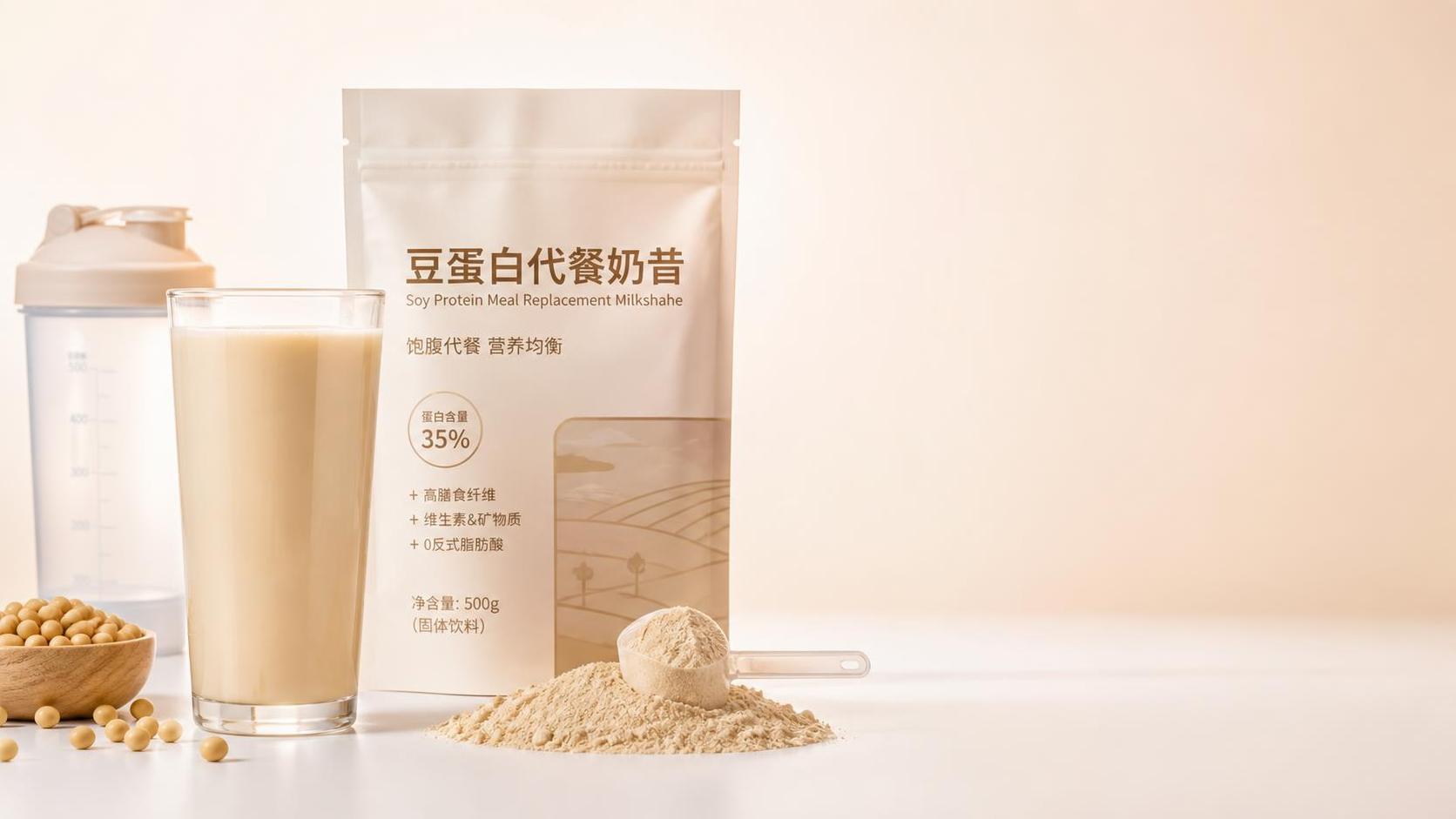
When Soy Protein for Meal Replacements Improves Satiety Without Gritty Texture
The difficult part of Soy Protein for meal replacements is not getting protein on the label. It is building a product that still feels drinkable on day 30 of repeated use. Technical teams usually discover this quickly: satiety can be improved with higher protein loading, but once the powder system starts reading as chalky, beany, dry, or sandy on the tongue, compliance drops. Consumers do not describe that as a formulation failure. They simply stop buying it.
That is why soy protein tends to be evaluated less as a single ingredient and more as a balancing tool inside the whole meal replacement matrix. Its value shows up when formulators need protein efficiency, moderate cost control, and a fuller drinking experience, yet cannot tolerate the gritty finish that often appears when particle size, hydration rate, oil phase, and sweetener profile are not aligned. In powder shakes, ready-to-mix sachets, and some shelf-stable beverages, the real question is not whether soy can work. The question is under what processing conditions it keeps body and satiety without turning the texture heavy or dusty.
One common misjudgment is to treat texture complaints as purely flavor issues. In practice, “gritty” often comes from several smaller decisions stacking together: insufficient dispersion at the start of mixing, oversized insoluble fractions, poor compatibility with fiber systems, or thermal treatment that changes suspension behavior. A meal replacement designed for quick shaking in a bottle faces a different reality from one blended at high shear in a plant. The consumer product has almost no forgiveness. If the powder needs too much agitation or too long a rest time to hydrate properly, sensory defects become visible immediately.
This is where application context matters. In a gym-adjacent satiety shake, a slightly thicker body may be accepted because consumers often associate viscosity with fullness. In office meal replacement formats, especially those positioned as breakfast replacements or working-lunch solutions, the tolerance is lower. People want satiety, but they also want speed and a clean swallow. Anything that leaves residue at the bottom of the shaker or sticks to the palate tends to be judged harshly. The same soy system can therefore succeed in one channel and underperform in another, even before flavor is discussed.
Another difference appears between powder products and liquid products. Powder systems allow some room to engineer the consumer preparation experience through agglomeration, instant properties, and blending order. In contrast, a ready-to-drink format has to survive thermal processing, holding time, and distribution while keeping sedimentation under control. Soy protein can support a more satisfying nutritional profile, but heat history matters. If the beverage sees aggressive processing without enough attention to stabilization, the final texture may drift from smooth and creamy to dense and slightly particulate. That is not always visible in pilot samples prepared fresh; it becomes clearer after storage.
Satiety itself also gets oversimplified. Teams sometimes assume that raising protein alone will solve hunger management. It helps, but the perceived effect usually comes from interaction between protein, viscosity, sweetness, and digestion pace. If the drink feels thin despite a strong nutrition panel, consumers may not read it as filling. If it becomes too thick, they may stop using it daily. The workable middle is usually a texture that feels substantial in the first sip, stays uniform through the bottle, and does not become pasty as it warms.
Support ingredients matter more than many early concepts assume. Fiber can improve fullness but can also expose soy’s rough edges when hydration is uneven. Mineral fortification may bring nutritional credibility while affecting flavor cleanliness. Fat systems can round out mouthfeel, yet if the emulsion is not well designed, the product may feel simultaneously creamy and powdery, which is a particularly difficult sensory contradiction to fix later. In development work, this is often where a technically acceptable prototype fails a second tasting round.
Some manufacturers reduce that risk by paying attention to ingredient handling before formulation decisions are locked. Fine botanical powders, flavor carriers, and texture-supporting components need stable aroma, moisture control, and predictable packing performance, especially in dry blend operations. For that reason, supporting materials such as Lilac Powder are usually evaluated not only for taste contribution but also for how they behave in storage and dosing. Food-grade handling, low-temperature grinding that helps preserve original aroma, and moisture-resistant kraft packaging are practical details, not brochure language, because dry systems are highly sensitive to inconsistency from one batch to the next.
On site, the most revealing questions are usually basic. How long is the actual mixing window? Is the product prepared with cold water, plant milk, or ambient water from an office dispenser? Will consumers use a shaker ball, a spoon, or a blender? Does the product need to remain uniform for ten minutes, or for an hour on a desk? These conditions often decide whether soy protein performs smoothly or gets blamed for faults created elsewhere in the system. A bench sample mixed under ideal lab conditions can hide problems that appear instantly in real use.
There is also a manufacturing-side judgment that deserves more attention: not every meal replacement needs to chase the highest possible protein load. In some formulations, a slightly lower protein target with better dispersion and a cleaner finish creates a stronger repeat-purchase result than an aggressive claim supported by a difficult texture. Teams with production experience usually respect this tradeoff. Consumers experience satiety through the whole product, not through the nutrition table alone.
Where soy works especially well is in products that need a broad nutritional platform and reliable economics without moving into an overly indulgent sensory profile. It can fit breakfast shakes, controlled-calorie meal replacements, and hybrid wellness products positioned between sports nutrition and daily nutrition. It becomes less forgiving when the concept depends on very light, juice-like drinking behavior or when the formula carries multiple challenging actives that already strain texture stability.
A practical review usually comes down to three checks. First, test the product in the way consumers will actually prepare and drink it, not only under lab shear. Second, evaluate texture over time, not just at the first sip. Third, look at the full ingredient system before blaming soy for grittiness. When those checks are done seriously, Soy Protein for meal replacements often proves to be less of a compromise ingredient and more of a formulation anchor, provided the team respects the sensory realities of the final scene where the product is used.
That is also why experienced food manufacturers keep investing in process discipline, packaging control, and ingredient consistency alongside new product development. A company with long production history and export-facing quality expectations usually understands that repeatable sensory performance matters as much as specification compliance. Whether the final concept is a convenient powder sachet or a more premium functional blend, the technical win is the same: a meal replacement that feels filling, mixes cleanly, and does not ask the consumer to tolerate texture problems in exchange for nutrition.
Tag
Related Products


Leave A Message
If you are interested in our products and want to know more details, please leave a message here, we will reply you as soon as we can.


