
Fat Fish Incident
When soy sauce for stir-fry dishes should be added to prevent scorching
When Soy Sauce Should Be Added to a Stir-Fry to Prevent Scorching
Knowing when soy sauce for stir-fry dishes should be added is one of those small operational details that separates a clean, fragrant wok dish from one that tastes bitter, overly dark, or flat. Soy sauce is not difficult to use, but it is easy to misuse under high heat. A few seconds in the wrong place can cause the sugars, amino acids, and fine flavor compounds in the sauce to darken too aggressively.
The practical answer is simple: soy sauce should usually be added after the main ingredients are nearly cooked, preferably onto the hot side of the wok rather than directly onto an empty, smoking-hot surface. It should then be tossed quickly with the food and removed from intense heat before it scorches. That timing protects its aroma while still allowing the sauce to coat the ingredients.
However, “add it near the end” is only the starting point. The best timing changes with the moisture level of the ingredients, the power of the burner, the amount of sauce, and whether the dish includes sugar, starch, dried spices, or a pre-made cooking sauce. In busy kitchens, these variables explain why one batch looks glossy and balanced while the next develops burned spots around the wok edge.
Why Soy Sauce Scorches So Easily
Soy sauce contains water, salt, fermented flavor compounds, and varying amounts of natural or added sugars depending on the style. When it reaches a very hot dry wok, its water flashes off almost immediately. What remains can stick to the metal and burn before the cook has time to spread it through the ingredients.
This is most common when the wok is overheated after frying aromatics, or when a small amount of dark soy sauce is poured into an empty central area. Dark soy sauce is useful for color and body, but it is generally less forgiving because cooks often use it in a concentrated stream. It can leave blackened streaks on the wok and make pale vegetables look muddy rather than appetizing.
A scorched sauce does not always taste obviously burnt at the first bite. Sometimes it shows up as a sharp aftertaste, an unpleasant bitterness, or a heavy caramelized note that overwhelms fresh ginger, garlic, seafood, or leafy vegetables. In mild stir-fries, even a small amount is noticeable.
The Best Moment: When the Ingredients Are Almost Done
For most stir-fry dishes, add light soy sauce when the protein and vegetables are about 80 to 90 percent cooked. At this point, the wok should still be hot, but the ingredients should release enough steam and moisture to buffer the sauce. The sauce can cling to the food instead of immediately burning on exposed metal.
A useful visual cue is this: the vegetables should have reached their intended color and structure, while the meat, tofu, or seafood should need only a brief final toss. If the ingredients are still raw, soy sauce tends to cook too long and lose much of its fragrance. If everything is already fully cooked and cooling, the sauce may sit on the surface rather than integrating with the dish.
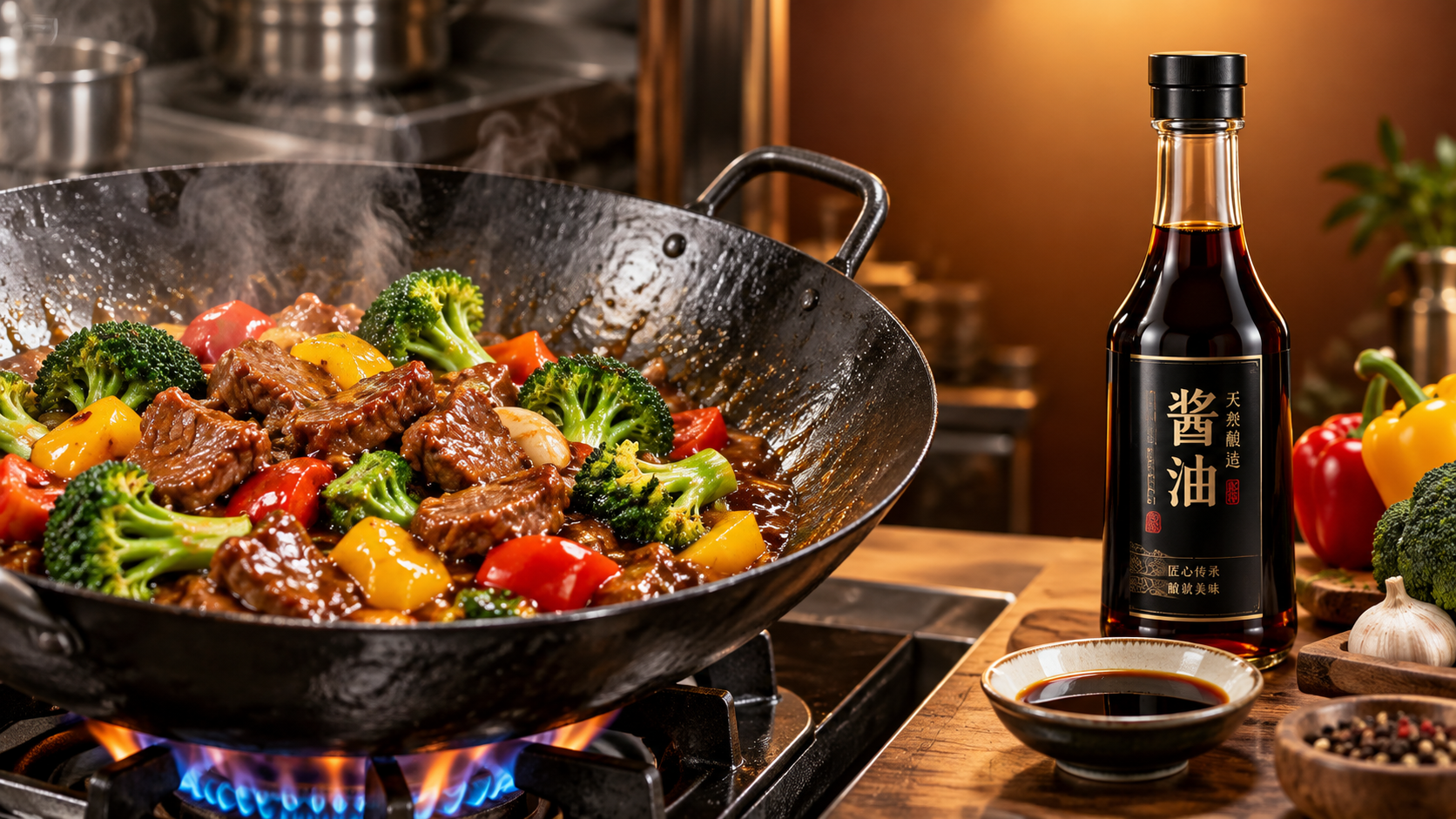
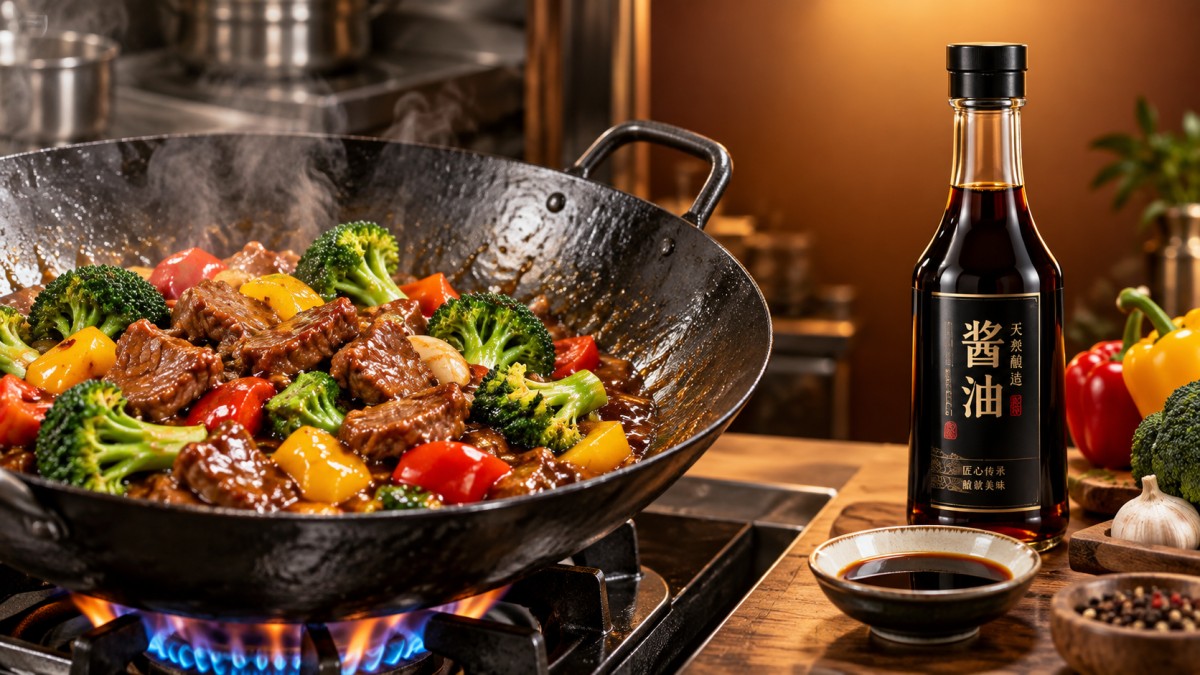
For a fast beef-and-pepper stir-fry, for example, the beef should already be mostly seared and the pepper should have softened slightly but still retain a crisp edge. Add soy sauce, toss for several seconds, then finish with any slurry or aromatic oil. The goal is not to fry the soy sauce by itself. The goal is to season the hot food efficiently.
Where You Pour It Matters as Much as When
Many experienced cooks pour soy sauce around the side of the wok rather than directly over the center of the food. This technique gives the sauce a brief contact with the hot metal, creating a roasted aroma before it runs back into the ingredients. It works well, but it is not an invitation to pour sauce onto a dry, smoking wok.
The wok wall should be hot, lightly coated with oil, and close enough to the food that the sauce immediately meets moisture and movement. If the cooking surface is visibly smoking or the food has been pushed too far away from the side, lower the heat slightly before adding the sauce. In commercial wok cooking, where burners recover heat very quickly, this adjustment is often necessary.
For induction hobs, flat pans, and smaller home burners, pouring directly over the ingredients is usually safer. These setups often have less of the curved wok-wall heat that makes the traditional edge-pour method effective. The priority is even coating, not theatrical flame contact.
Use Different Timing for Light and Dark Soy Sauce
Light soy sauce is primarily used for seasoning. It can be added near the end, but it can also be incorporated into a sauce mixture earlier if there is enough liquid in the pan. Its job is to bring savory depth without dominating the color.
Dark soy sauce is more often used for color, sheen, and a slightly fuller sweetness. Add it in smaller amounts and avoid leaving it on a dry hot surface. In many dishes, it is best stirred into light soy sauce, water or stock, and any sugar before cooking. This makes it easier to distribute and reduces the risk of dark patches.
If a recipe calls for both, do not assume they should be handled identically. A practical approach is to season the ingredients with light soy sauce during the final toss, then add only a small amount of dark soy sauce if the color still needs adjustment. This gives the operator control. Once a stir-fry becomes too dark, there is little that can be done to restore a fresh appearance.
When Soy Sauce Can Be Added Earlier
There are exceptions. Soy sauce can be added earlier when it is part of a wetter braising-style stir-fry, a sauce with stock, or a mixture thickened later with starch. In these dishes, the liquid protects the sauce from direct scorching and gives it time to penetrate the ingredients.
It may also be added early in fried rice, but only under controlled conditions. The rice should be dry and separated, the pan should not be smoking excessively, and the cook should toss immediately. Pouring soy sauce over rice that is sitting still in a very hot pan often creates uneven brown spots. A better method is to drizzle a modest amount around the edge while continually moving the rice.
For noodle dishes, the decision depends on whether the noodles have enough moisture. Fresh noodles, blanched noodles, and sauce-coated noodles tolerate soy sauce better than dry, heavily fried noodles. If the noodles are already crisping in a dry pan, add a small splash of water, stock, or prepared sauce before the soy sauce goes in.
A Reliable Sequence for High-Heat Stir-Frying
A repeatable sequence helps prevent scorching, especially when several dishes must be prepared with consistent color and flavor:
- Heat the wok and add oil before the metal begins to smoke heavily.
- Cook aromatics briefly; garlic and ginger should become fragrant, not dark brown.
- Stir-fry protein and vegetables until nearly done.
- Create space near the side of the wok, but keep food close enough to catch the sauce.
- Add soy sauce in a thin stream and toss immediately.
- Add sauce, stock, or starch slurry if the dish needs more coating or moisture.
- Finish with sesame oil, pepper, herbs, or other delicate seasonings after the heat is reduced.
This order is particularly useful for operators who need to train new staff. Rather than telling someone to “use high heat,” it gives them a sequence of observable checks: aroma, ingredient doneness, surface moisture, and the speed of the final toss.
Watch Out for Sugar, Chili, and Dry Seasonings
Soy sauce becomes more vulnerable to scorching when the dish also contains sugar, honey, sweet bean sauces, or sweet cooking wines. These ingredients should normally be diluted into a finishing sauce rather than dropped individually into an empty hot wok. A glossy sauce is desirable; a sticky, blackened coating is not.
Dried chili and pepper deserve separate attention. They bloom best in oil at moderate heat, but they burn quickly when exposed to intense flame and concentrated soy sauce. In food processing or batch seasoning, using clean, consistent dried spice ingredients can make flavor control easier. Seedless pepper sections, such as Pepper Section (Seedless), can be useful where a cleaner pepper profile and more predictable handling are preferred. Their aroma should be protected with the same care as soy sauce: add them early enough to release fragrance, but never leave them in oil until they turn dark.
Where dry spice materials are stored for repeated use, packaging format, shelf-life management, and lot consistency also matter. A 12-month quality guarantee may support routine planning, but storage conditions and the actual production schedule still need to be managed carefully. Heat, humidity, and prolonged exposure after opening can change the aroma of any spice ingredient.
Common Mistakes That Lead to Bitter Stir-Fries
The most frequent mistake is waiting until the pan is too hot. A wok can move from “very hot” to “burning sauces” quickly, particularly after moisture has evaporated. Another problem is adding too much soy sauce at once. Excess liquid lowers pan temperature briefly, then reduces and concentrates unevenly, often leaving salty pockets.
Some cooks also add soy sauce before vegetables have released any moisture. This can work with a prepared sauce, but not with a small stream of concentrated soy sauce. The sauce is then exposed directly to oil and metal instead of being carried by steam from the ingredients.
Finally, avoid treating color as proof of flavor. A very dark stir-fry is not necessarily well seasoned. Taste after the final toss whenever the workflow allows. If more saltiness is needed, add a little light soy sauce off the strongest heat rather than trying to repair the dish with more dark soy sauce.
Consistency Comes From Heat Control, Not Extra Sauce
The most dependable rule is to add soy sauce for stir-fry dishes when the food is nearly cooked, the wok still has active heat, and there is enough moisture or movement to keep the sauce from sitting in one place. Toss quickly, then finish the dish before the sauce has time to burn.
Good stir-fry cooking respects ingredients that are easy to damage: fermented sauces, fresh aromatics, and carefully prepared spices all have a narrow window in which they taste their best. That attention to timing is part of the quality tradition that food makers build over decades, whether serving a local kitchen or developing products for broader international markets. Better results usually come not from adding more seasoning, but from giving each seasoning the right moment in the wok.
Tag
Related Products


Leave A Message
If you are interested in our products and want to know more details, please leave a message here, we will reply you as soon as we can.


