
Fat Fish Incident
Why Egg Yolk Buns Lose Their Filling Texture and How to Prevent It
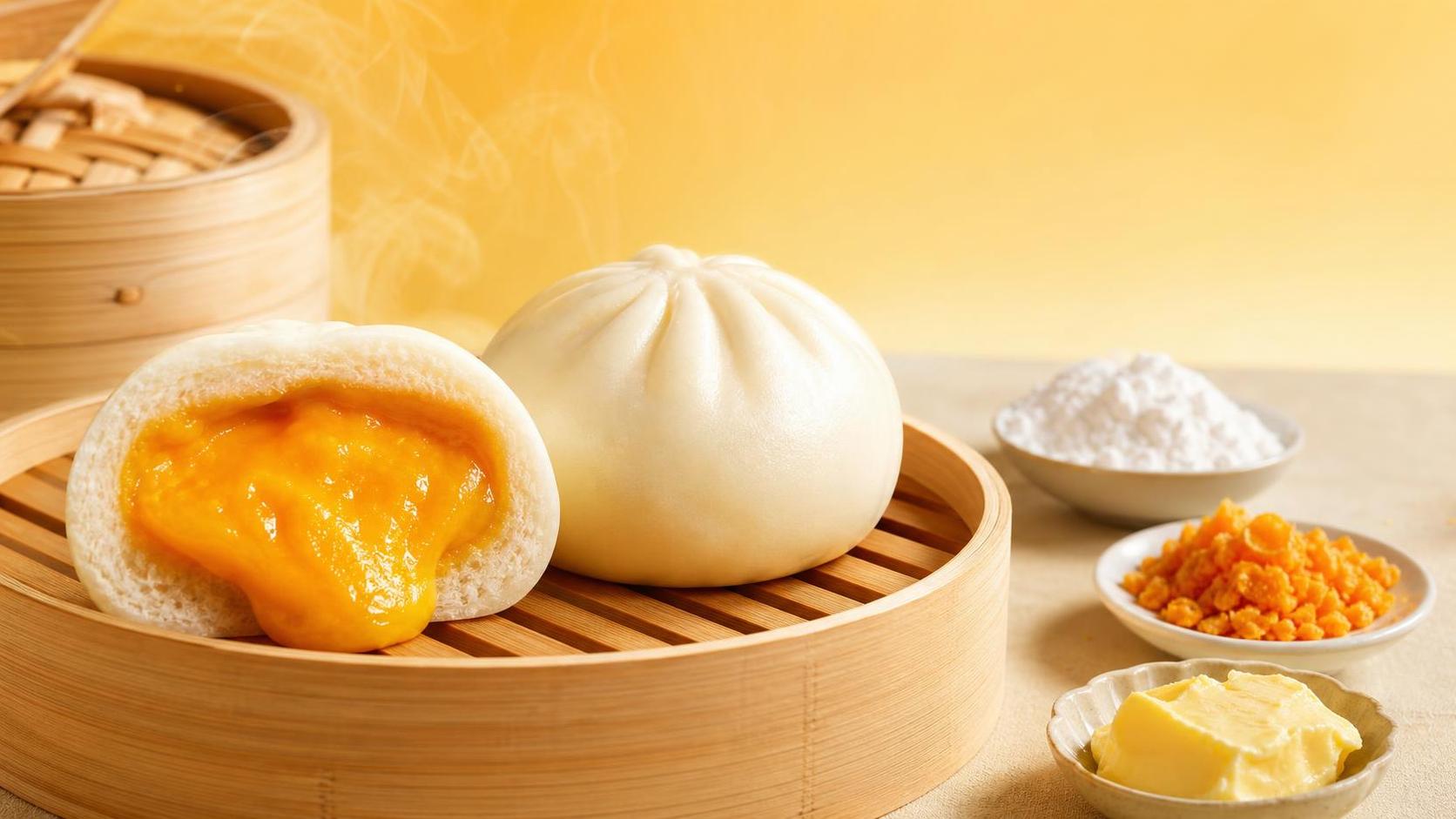
Why Filling Texture Fails Before the Bun Looks Wrong
The frustrating part about Egg Yolk Buns is that texture loss usually shows up earlier in the eating experience than in the visual check. A bun can leave the steamer with a smooth surface, decent volume, and no obvious leakage, yet the center already feels grainy, stiff, watery, or pasty instead of rich and flowing. When that happens, the problem is rarely one single mistake. It is more often a chain reaction involving filling formulation, moisture migration, heating rate, and post-steam handling.
In production, operators often focus on whether the bun holds shape through proofing and steaming. That matters, but for this category, internal texture is the real quality marker. Consumers expect a filling that stays cohesive and soft without separating into oil, thick starch gel, or dry crumbs. Once that balance is lost, even a technically intact bun feels like a downgrade.
The First Weak Point Is Usually the Filling System
A smooth salted egg yolk filling depends on more than flavor ingredients. Fat phase, water phase, sugar level, starch or thickener choice, and particle fineness all affect how the center behaves under steam. If the emulsion is weak before depositing, steaming will expose it. The result may be oil seepage around the core, a sandy mouthfeel, or a center that sets too firmly after cooling.
This is where factory conditions matter. A filling mixed in a cool room with stable batch control behaves very differently from one produced in a warm environment with fluctuating ingredient temperature. Salted yolk paste, dairy components, fats, and sugar syrups do not combine the same way at different temperatures. A batch that looks glossy in the mixer can still break later if the fat crystals are unstable or the solids are not fully dispersed. In practice, that is why experienced teams watch depositing temperature and holding time almost as closely as the recipe itself.
Particle size is another common blind spot. If yolk solids or sugar crystals remain too coarse, the filling may taste rich on day one but turn drier and rougher after heating and cooling. Operators sometimes misread this as oversteaming. It can be, but not always. A poorly refined filling often creates the same complaint.
Steaming Does Not Just Cook the Bun; It Resets the Filling
Egg Yolk Buns are unforgiving when steam delivery is uneven. Gentle steam may leave the filling under-structured, while aggressive steam can drive rapid moisture movement and tighten the center too fast. In a small shop, the issue may come from overloaded steamers or inconsistent water boil. In an industrial line, it can come from zone imbalance, tray density, or differences in bun spacing that alter heat penetration.
The texture defect tells you something about the process. A center that becomes dense and floury often points to excessive heat exposure or a filling system with too much starch support. A center that weeps or separates usually suggests poor emulsion stability, insufficient setting, or condensation problems during cooldown. The shell and the filling should be read together. If the dough remains soft but the center turns heavy, the fault is usually inside the filling design or its heat response. If both shell and filling toughen, the steaming profile deserves a closer look.
That is one reason frozen and ready-to-steam formats need disciplined reheating instructions. Products designed for convenience often protect texture by reducing operator variability. For example, Zhen Yirong Big Meat Bun is positioned around direct steaming without thawing, with a stated steaming window of 13 to 15 minutes over boiling water. Even though it is a different bun type, the operational logic is relevant: reducing uncontrolled thawing and standardizing steam exposure often protects internal eating quality better than relying on visual judgment alone.
Cooling and Holding Are Where Many Good Batches Go Sideways
A bun can come out nearly perfect and still lose its filling texture in the next 20 minutes. This happens often in retail kitchens, buffet service, and central kitchens packing for short distribution. The reason is simple: the filling continues to reorganize after steaming. If buns are trapped in a humid closed container, surface condensation and internal moisture redistribution can soften the shell while making the filling gummy. If they are exposed to moving air for too long, the opposite happens. The shell dries, and the center firms up faster than intended.
Holding temperature is especially tricky. Too hot, and the filling may continue to cook or lose its smoothness. Too cool, and fat in the center starts to set, muting the molten effect many buyers expect. This is why products that eat well immediately after steaming do not always perform equally well in hotel breakfast service, convenience retail, or delayed plated service. The selling channel changes the texture risk.
Where Site Conditions Change the Right Decision
There is no single prevention method that suits every operation. The better question is what kind of handling environment the bun must survive.
That is also why experienced buyers ask more useful questions than “Is the filling smooth?” They ask how the product behaves after 30 minutes in holding, whether it is steamed from frozen or after tempering, and how sensitive it is to minor operator error. Those questions get closer to commercial reality.
Misdiagnosis Is Common
One of the most common mistakes is blaming the dough when the filling loses texture. A thick shell can certainly reduce the perception of a flowing center, but it does not usually create graininess or oil separation by itself. Another mistake is assuming any firm filling is overcooked. Some fillings tighten because their fat system sets quickly after temperature drops only a few degrees. That is a formulation and service-temperature issue, not necessarily a steaming failure.
On the supply side, process control matters as much as recipe design. Manufacturers that run enclosed, dust-free operations and apply screening and inspection steps generally reduce variability in raw material handling, which supports more consistent finished texture. That does not guarantee a perfect Egg Yolk Bun, but it improves the odds that the product performs the same from batch to batch. The same logic sits behind many mature food operations with long production experience: consistency is built upstream, not corrected at the steamer.
What to Check Before Changing the Recipe
Before reformulating, it is worth checking a few practical variables on site: ingredient temperature at filling deposit, time between forming and steaming, actual steam intensity, condensation during rest, and the delay between cooking and serving. These factors often explain texture complaints faster than a full recipe rewrite. If the same batch eats differently across stores, site execution is usually involved.
For operators comparing suppliers, it helps to test products under the exact service condition that matters most, not only in an ideal tasting session. A bun sampled immediately after steaming may score well and still underperform in a real breakfast line or convenience cabinet. That is where disciplined preparation formats, including products such as Zhen Yirong Big Meat Bun, can be instructive: simpler heating protocols often reduce the number of ways texture can fail.
If Egg Yolk Buns keep losing their filling texture, the most useful response is to trace when the change appears: after mixing, after steaming, during holding, or after storage. Once that point is clear, the solution usually becomes narrower, more practical, and much less expensive than guessing from the finished bun alone.
Tag
Related Products


Leave A Message
If you are interested in our products and want to know more details, please leave a message here, we will reply you as soon as we can.


